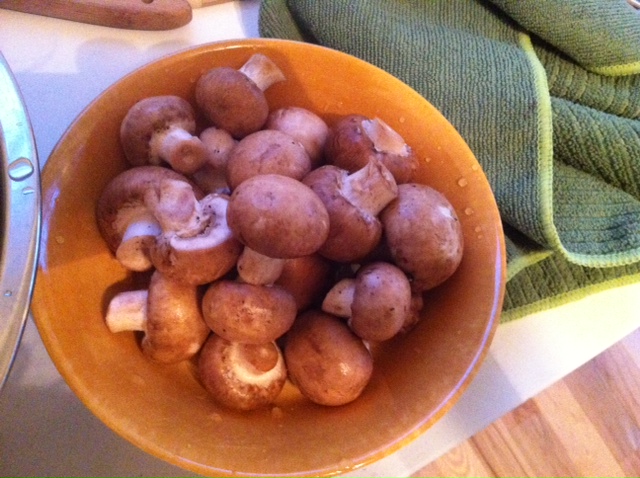
The Easiest Way to Clean Mushrooms

I love love LOVE eating mushrooms.  They're SO delicious and incredibly healthy, but I always hated cleaning them. 

I'd read online that the best way to clean mushrooms was to rub the dirt off with a paper towel.  Well that takes forever and doesn't even work that well.  Using a little mushroom brush (although great for cleaning freshly picked mushrooms for storage like the chanterelles I foraged in Finland) is also quite timely. 

I've also tried running individual mushrooms under running water which isn't very efficient either.  Lol some times I just said screw it and completely gave up on cleaning semi-dirty mushrooms all together -- I just cooked them with a little bit of dirt!

Well thanks to the Executive Chef at The Mint Gastropub in Bethlehem, PA, Erik Hoffman, I learned the easiest and quickest way to clean mushrooms (and I'm no longer eating soil in my gravy!).  

The Easiest and Quickest Way to Clean Mushrooms

Before you begin, know that this is how you should clean mushrooms right before you cook with them, not store them.  Onward!

Step 1.  Ask yourself, "do the mushrooms even need cleaned?  Are they actually dirty?"  If your answer to this question is yes, proceed to step 2.  If they aren't dirty, no need to clean them.  Cook on!


Step 2.  Give a lil' shake-shake, dunk-dunk to the mushrooms using your hands.

Step 3.  Remove the mushrooms by lifting them out of the water bowl and place them into a different clean bowl.

NOTE:  DO NOT pour the water over the mushrooms into a colander for example.  You'll just get the mushrooms dirty again!



Step 4: Discard your dirty water and then 'oo' and 'aw' over how beautifully clean your mushrooms are and enjoy cooking with them!
Now it's time to hear from you.  Answer today's Take Control Now Question by clicking 'comment' below.

Take Control Now

How does this mushroom cleaning technique compare to your normal mushroom cleaning method?  Better, worse?   

My 3 Favorite Ways to Eat Kale

Kale is one of America’s new favorite vegetables which is amazing because it's so good for us!  Just 1 cup of raw kale has...

  • only 8 calories
  • about 0 fat
  • 24 mg of calcium
  • 8 g of magnesium
  • 79 g of potassium and contains
  • Vitamin C
  • Vitamin A
  • Vitamin K
  • folate
  • and many more vitamins and minerals in trace amounts... not to mention all those phytonutrients and antioxidants.  Yeah baby!

But how do you eat it and make it taste good?

Today I share with you...

My 3 Favorite Ways to Eat Kale

1.  Add it to smoothies!

I did this last night when I got home from yoga.  I blended frozen banana chunks, frozen strawberries, frozen blueberries, a small leaf of raw kale, water and almond milk and copped dates.

I even topped the final (very large bowl) of smoothie off with mini shredded wheat bites.  It added a nice 100% whole grain crunch that was surprisingly, delicious!

2.  Braise that kale baby!

Trish the Dish's Kale Recipe (Loooove this!)
Prep time: 5-10 minutes
Cooking time: about 10 minutes

Ingredients:

- 1 head curly kale rinsed, de-stemmed and ripped of chopped into roughly 1"x1" pieces
- 1 shallot minced
- 1-2 cloves garlic eminced (very finely sliced, not chopped) 
- 1-2 C veggie broth 
- sea salt and pepper to taste

Prepare all ingredients before cooking.  Bring a large pan to medium heat and keep veggie broth next to the pan.  Add minced shallot once the pan is hot and continuously stir (don't you dare leave that pan!).  Once the shallot brings to slightly brown, add a small amount of veggie broth to remove the browning.  Add garlic and continue to do the same for about 30 second or until you smell the aromatics being released from the garlic.  Season with sea salt and pepper.  Add the rest of the veggie broth and place the kale in the pan.  Using tongs, toss the kale in liquid once evenly, reduce heat to low, cover with a lid and let cook for about 5 minutes or until kale is soft and bright green.  Remove from heat and serve.  
​* Be careful to ensure there's enough liquid in the pan that the kale steams while covered.
** I love eating this with mashed potatoes and gravy!  

3.  Add kale to soups and stews.

Add small amounts of kale (or any leafy green) to large batches of soups and stews at the end of the cooking process.  The kale can be fresh or frozen.  Even a few tablespoons will add a tremendous benefit to your lentil stew, veggie chili or rice and beans.


Now I’d love to hear from you... 

Take Control Now Question

What’s your favorite way to eat kale?

Answer by clicking ‘comment’ below.

4 Ingredient Easy Peasy Veggie Burgers

Burgers are an essential staple to American culture, however, veggie burgers are much more health and weight-loss friendly.


Veggie burgers (when made with whole, plant foods) are filled with fiber, micro- and phytonutrients, contain zero cholesterol, are naturally low in fat and calories and they're filling!

Animal based burgers such as beef and turkey burgers, all contain cholesterol (which you don't need to consume because it's a non-essential nutrient), have zero fiber (this is bad), are higher in fat than plant foods, all contain cholesterol (yup, this is bad too) and are higher in calorie density.  

Instead of consuming animal burgers, try making veggie burgers with just 4 simple ingredients you already have in your home.

4 Ingredient Easy Peasy Veggie Burgers

1.  Base ingredient

The base ingredient will make up the majority of the ingredients and should be filling.  Pick at least one base ingredient such as...

  • whole-grains (barley, buckwheat, corn, faro, spelt, rice or quino)
  • beans  (Black beans are a traditional favorite, but you can also mix and match different beans such as black, pinto and kidney beans).
  • lentils
  • potato, winter squash or sweet potato

If using beans, be sure to rinse and strain your beans if coming from a can.  Mash the beans using a hand potato masher or a fork.  This will help them blend and stick better with the additional ingredients.

2.  Add a veggie!

Add veggies for added color, flavor, texture and because they're so damn good for you!  Here are a few veggies to chose from...

  • grated carrots
  • chopped onions
  • minced garlic
  • chopped greens onions
  • grated beets
  • canned diced tomatoes
  • artichokes
  • mushrooms
  • sugar snap peas 
  • chopped bell peppers or any veggie your heart and taste buds desire!

3.  Binder ingredient

The binder ingredient helps hold the entire burger together and form a patty.  Here are your options...

  • oats or oatmeal (chopped oats or instant work well)
  • cooked whole-grains
  • starchy veggies such as cooked potatoes or winter squash or pumpkin
  • blended tofu

4.  Herbs and Spices

Herbs and spices add tremendous flavor and additional health benefits.  Season your burger mix with any of the following...

  • garlic or onion powder
  • mustard or ketchup
  • freshly chopped cilantro or parsley
  • "beef" seasoning or your favorite spice mix
  • dried dill, mint or parley
  • chili flakes 
  • toasted nuts or seeds

Instructions

  1. Turn the oven to 400 F.  
  2. Pick at least one ingredient from each category (base ingredient, veggie, binder and herbs/spices) keeping in mind how the flavors compliment one another.
  3. Once you have your base ingredient mashed (if using beans), mix all of your ingredients together in a large bowl.
  4. Place parchment paper on a baking sheet.
  5. Form the mixture into equal sized patties or even ball for "meat"balls.
  6. Bake in the oven for 10-15 minutes or until the top begins to brown or look crispy.  
  7. Flip the burgers and cook for an additional 5-10 minutes.
  8. Toast Ezekiel hamburger buns (my favorite!) in the oven or toaster while the burgers cook and prepare the rest of your burger toppings such as lettuce, tomato, onion, pickles, avocado, sprouts etc.

Take Control Now Question

What's your favorite veggie burger recipe or combinations?  What combinations would you like to try at home?

Answer by clicking 'comment' below.

3 Steps Needed to Eliminate + Prevent Inflammation

Most Americans suffer from this and don't even know it.  Most don't even feel it!

It's important to know if you have this too because it's associated with cardiovascular disease, arthritis, asthma, allergies, autoimmune diseases and more.

What is this mystery I speak ok?

Inflammation.

Chronic inflammation can be very troublesome because it can increase your chances of experiencing one of the above mentioned diseases. 

What is inflammation?
 

Inflammation is our body's natural response to foreign invaders or irritation.  Our white blood cells and the substances they produce (our immune system) are in place to protect us from foreign substances such as bacteria and viruses.

Inflammation should be temporary.  For example, if you sprain your wrist, you'll experience swelling (inflammation).  This is your body's natural response telling you to not use your wrist until the swelling goes down so you don't do further damage to it and give it proper time to heal.

This inflammatory process is a good thing.  The problem occurs when we experience inflammation chronically, which is not a good thing.

Chronic inflammation can lead to arthritis, asthma, cardiovascular disease, periodontal disease, autoimmune diseases and more, after days, months and years of regular irritation and inflammation.

In the case of cardiovascular disease, many people aren't aware they're experiencing inflammation because they don't feel it unlike allergies or Crohn's disease, making it more difficult for us to identify there's a problem.

How to Test for Inflammation

Despite not being able to feel inflammation from cardiovascular disease, there's a simple, non-invasive test your doctor can perform to test for inflammation.

Ask your doctor for a C-reactive protein (CRP) test.  If your doc finds your results are above normal, this means you have inflammation somewhere in your body.  Work with a competent practitioner to determine the type of inflammation you have, then follow these 3 steps to help relieve and eliminate inflammation.

The 3 Steps You Need to Take to Reduce, Prevent or Eliminate Inflammation

1.  Eliminate or reduce your animal food intake.  Animal foods a concentrated source of arachidonic acid which is a precursor to series 2 prostaglandin production which causes inflammation.  

Eat a diet low in arachidonic acid (a whole foods, plant-based diet) as a fundamental step to reducing or eliminating inflammation.  This means eating no more than 2-3 oz. of animal foods per week.  

2.  Take care of your gut!  Diets high in animal and refined foods can compromise the beneficial bacteria in your gut which help prevent inflammation.  Pathogenic bacteria love animal foods, another reason to omit or reduce them to no more than 2-3 oz per week.  

Additionally, pharmaceutical grade probiotics are encouraged for certain people to aid in the gut healing process.  Ask a competent practitioner which probiotics are right for you.  

3.  Lose that extra weight.  Being overweight increases your risk for inflammation.  Fat cells produce inflammatory cytokines.  Every extra pound of unneeded fat increases your risk of inflammation.  Just another reason to get serious about weight-loss.

Take Control Now Question

Are you concerned about inflammation?  Do you have a disease of inflammation?

Answer by clicking 'comments' below.

13 Plant-Based Sauce Recipe Ideas

Are sauces holding you back in life?  Or a lack of sauces that is, holding you back from eating more fruits, veggies, whole-grains and legumes?

Today, I share with you 13 plant-based sauce ideas that will have you making (or buying) yummy sauces in no time so you can get more healthy, plant-based foods in your belly!

1.  Pasta or pizza sauce.  Buy it or, make it on your own.  

2.  Salsa.  Use as a sauce for rice and bean dish, Mexican meals or as a sauce for tortilla pizzas.

3. "Alfredo" sauce.  Here is a great low-fat raw "alfredo" sauce made from a zucchini and pine nut base (start at minute 3:42 to skip directly to the sauce recipe).  All you need to make this sauce is a blender and it's excellent on zucchini or pasta noodles.  

4.  Cashew cheese sauce.  Use a basic version of this sauce as a base recipe and store in the fridge for 3-5 days.  Then, you can add different ingredients such as roasted red pepper, nutritional yeast or jalapeño pepper to turn this base sauce into a more complex meal.

5.  Tofu-based sauces.  Tofu takes on the flavor of whatever you mix it with or marinate it in.  Silken tofu is the type of tofu that is ideal for sauces.  Use it to make traditional white sauces or dressing such as caesar or ranch.  

6.  Hummus sauce.  Make your own hummus (or buy it!) then simply thin it by blending it with a complementary liquid.  Liquids include water, veggies juice or plant milk.  Add this hummus sauce to pastas or toss with a salad as a salad dressing.

7.  Lemon-tahini based sauce.  Lemon and tahini go excellent together and can be used as a salad dressing or a sauce to top baked potatoes or pasta.  Check out one of my favorite recipes here by Cathy Fisher. 

8.  Avocado-based sauce.  Use avocado as the base of a thick, creamy and more fatty tasting sauce.  

9.  BBQ sauce.   Try Cathy Fisher's BBQ sauce here as a sauce for corn on the cob, baked tofu or cauliflower wings.

10.  Creamy mushroom gravy.  I love this gravy by Cathy Fisher but you can make any gravy.  It's amazing on mashed potatoes, tempeh or green beans.    

11.  Honey Mustard Sauce. This is so simple to make.  Just combine stone ground dijon mustard with honey (about 50/50 ratio) and that's it!  I enjoy this on potato salad and it makes eat leafy greens so easy! 

12.  Sweet n Sour sauce.  Use for rice and veggie or Asian style dishes or as a dip for salad rolls.

13.  Peanut sauce.  Same as sweet n sour sauce, use for rice and veggie or Asian style dishes or as a dip for salad rolls.

Take Control Now

Which of these sauces are you most excited to try?  Or, do you have another sauce recipe not mentioned above to share?

Anser by clicking 'comment' below.