How to meet your daily fruit recommendation

Did you know that in South Carolina, the wonderful state where I live, that 91% of us aren’t eating the recommended amount of fruits and vegetables!? (CDC, 2011).  And it’s not just South Carolina my friends.  A 2014 CDC indicator report found that not one state meets the fruit and vegetable intake recommendations (CDC Indicator, 2013).  

So, last week I shared “how to eat the recommended amount of vegetables” and today I'm sharing “how to meet your daily fruit recommendation.”  So here we go.  The fruit serving recommendation is.... drum roll please...

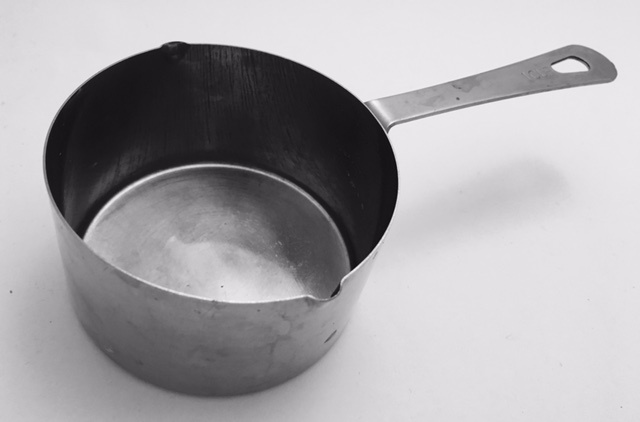
According to the USDA, women ages 31 and over should eat at least 1.5 cups of fruit a day. This is what a cup and a half looks like.

For men ages 14 and older, the fruit recommended is 2 cups a day.  This is 2 cups...

Here’s what a cup of fruit looks like….


How do you know if you’re actually eating 1 cup or not in real life?

Don’t get too caught up in this.  But generally speaking, one medium size fruit will do the trick or 2 small handfuls.  Most importantly, make sure you’re just eating fruit at least twice a day and then, think more about how much you’re actually eating.

How can you make sure to eat the recommended amount of fruit every day?  

Always eat fruit at breakfast and as a daily dessert.  Starting your day with whole-grains and fruit will ensure you’re off on a good start to meet the recommendations.  

Here’s 3 ideas for how to eat fruit at breakfast:

  1. Oats topped with fresh and dried fruit such fresh strawberries, banana and blueberries and dates.
  2. Oats cooked with frozen fruit such as cherries and topped with dates (that’s fruit!) and other goodies such as cinnamon and walnuts.
  3. Berry breakfast crisp

I don’t recommend eating just fruit for breakfast because it’s not very filling so it won’t keep you full very long.  Be sure to eat a Foundational Filling Food with your breakfast so you’ll have energy for the next 3-4 hours.  

As we discussed last week, we want to be sure our lunches and dinners are primarily vegetables (potatoes, corn, non-starchy veggies and beans) to ensure we actually eat our veggies.  Then, you can save your daily dessert for more fruit.

What is a daily dessert you might be wondering?  

A daily dessert is one that satisfies your sweet tooth, but is healthy enough to eat everyday.  If you’re ever unsure if a food or meal is a daily dessert or not, ask yourself “is this healthy enough to eat for breakfast?”  If it is, it’s a daily dessert.

Here’s 3 daily dessert ideas to help you meet your daily fruit recommendation:

  1. Berry chocolate banana ice-cream
  2. Microwaved baked apple
  3. Apple-pineapple crisp

Now it’s time to make use of this knowledge and put it into action.  Here’s what I want you to do for today’s...

Take Control Action Challenge

Just as you did last week, I want you to write down everything you ate yesterday.  Then, tell me how many servings of fruit you ate during that 24 hours.  And, what’s one way you can make sure you eat the recommended fruit serving everyday?

Let me know by clicking ‘comment’ below.

Sources

DHEC, 2011.  South Carolina Obesity Burden Report, CDC.  Accessed online, May 2016 at:  https://www.scdhec.gov/Health/docs/Obesity%20Burden%20Report%202011.pdf

CDC Indicator report, 2013.  Accessed online May 2016 at: http://www.cdc.gov/nutrition/downloads/national-action-guide2013.pdf

USDA fruit and vegetable recommendations.  Accessed online, May 2016 at http://www.choosemyplate.gov/fruit


How to eat the recommended amount of veggies

Almost 91% of South Carolinians do not eat the recommended amount of fruits and vegetables according to a 2009 CDC Indicator report.  

So today, I share with you 4 ways to actually eat the recommended amount of veggies.  But before I can there's a few questions we must answer...

1.  What's the actual vegetable recommendation?

We can't figure out how to eat more of them if we don't know how many we're supposed to eat.  According to the USDA, women ages 19-50 years old should eat 2 ½ cups and women 51+ years should eat at least 2 cups a day.

 According to the USDA, men ages 19-50 years old should eat 3 cups and men 51+ years should eat at least 2 ½ cups a day.

2.  What’s considered a vegetable?  

  • Starchy veggies: potatoes, corn, sweet potatoes, yucca, winter squash etc.
  • Non-starchy veggies: cucumber, tomato, onion, Brussel sprouts, kale, eggplant etc.
  • Beans, peas and lentils

3.  What does a veggie serving look like?

1 cup of raw or cooked veggies = one serving

  OR

2 cups raw leafy greens = one serving, such as different lettuces, uncooked kale or fresh herbs.

Veggies can be eaten raw, cooked, frozen, dried or canned.  Doesn’t matter.  

Now we have all the information we need to figure out how to actually eat the recommended amount of veggies.  To help you do that, here's 4 tips.

4 ways to ensure you eat your veggies

1.  Always have 1 cup of veggies at lunch, 1 cup of veggies as part of a snack (remember sweet potatoes count!) and 1 cup at dinner.  Veggies at breakfast is a bonus.

Here's an example of what that might look like.

  • Lunch: burrito bowl:  brown rice, corn,
  • Mini-meal: half of a baked sweet potato
  • Dinner:  small side salad (which we’ll eat first) with fettuccini cashew Alfredo with broccoli and peas

OR

  • Lunch:  Veggie burger with lettuce, tomato, onion and pickle with sweet potato fries
  • Mini-meal:  corn on the cob or box of spicy lentil kale soup
  • Dinner:  Small garden salad with veggie lasagna

2.  Don’t eat meat and dairy at every meal. Replace animal products with veggies instead.

3.  Eat mini-meals, not snacks:  you’re more likely to eat healthier.  

4.  Plan your meals ahead of time to ensure they have enough veggies.  Don’t forget:  corn, beans, potatoes and sweet potatoes count.  Eat more of these foods! (Just skip the butter and oil on top).

Or, use a service such as HappyHerbivore.com's Meal Mentor Program that emails you plant-based and veggie filled recipes with a corresponding grocery list so you don't have to plan but still eat your veggies!  

Also, look out for Trisha's Table -- Healthy Meals To Go in Columbia, SC (we'll keep you posted!).

Take Control Now Challenge

  1. Write down everything you ate yesterday.  Did you meet the vegetable recommendation?
  2. In the comments section, write how many servings you think you ate and one way you can increase the quantity of veggies in your diet every day.

Source:  USDA, My Plate accessed online May 2016 at http://www.choosemyplate.gov/vegetables

4 concerning SC health stats

If you’ve followed me the last few years, you know I’ve moved around and traveled a lot.  I’ve worked in Oregon for a Native American Diabetes team, in PA as a Nutrition Educator for The Food Trust and lived in Finland for 2 years to get my Master's in Public Health Nutrition (school is free there -- no tuition fees!).  

Now I’m living in South Carolina and I’m so excited because I'm not moving anymore!  I can officially say I'm staying put.  Not only does this mean I’m finally growing a garden, but more importantly for me, I have the opportunity to have a greater local impact.  

Today I’m going to discuss 4 concerning health stats I have about my new home, South Carolina.  Now, don’t worry, if you live in a different state, you’ll still find value in the below video (plus, I’d love to hear your thoughts in the comments section below -- what's the biggest health concern you have for your community and what's your dream solution for seeing it fixed?).

4 Concerning South Carolina Food Facts

Concerning SC health stat #1:

90.7% of South Carolinians are not eating the recommended amount of fruits and veggies every day (DHEC, 2011 cites CDC 2009) .  

What!?  That statistic tore my stomach to pieces when I first read it and it still shocks me.  90.7%!?  This is a 2009 figure provided by a CDC Indicator Report and the "best" figure I found was 82.6%. (SC Nutrition, 2011)  Either way, we're in really bad shape here.

What's the recommended amount of fruits and vegetables?  Eating 2 or more fruits per day and 3 or more veggies every day.  Next week, I'll show you what that actually looks like on your plate and how you can successfully and deliciously do that every day.

According to a CDC 2009 State Indicator Report, 90.7 percent of adults did not meet the fruit and vegetable recommendation of consuming both two or more fruits per day and three or more vegetables per day.

Concerning SC stat #2

About 66% of South Carolinians have an overweight or obese BMI.  That’s 3 out of every 5 people you see walking on the street.  

This is concerning because excess weight is associated with an increased risk for numerous chronic diseases and it’s expensive for our state.  In 2003, obesity-related medical expenditures were more than $1 billion (SC Nutrition, 2011).

Concerning SC stat #3

Now on an even more specific location, let’s talk about Lexington County, where I live (right across the river from Columbia, the capital) and lump 3 concerns into one:

  • 68% of Lexington county residents had an overweight or obese amount of weight in 2013
  • 12.4% of our residence have type II diabetes and
  • almost 43% of us have high cholesterol (Coordinated, 2013)

Concerning SC health stat #4

Heart disease and cancer are South Carolina’s top 2 killers.  Almost 20,000 people died from heart diease and cancer alone in 2014.  Stroke is our 5th leading cause of death and diabetes is 7th (CDC, 2014).  These diseases can be prevented, improved and even reversed with diet.    

So there you have it.  4 concerning health statistics for the Palmetto State.  

Now I want to hear from you.  Please answer today’s Take Control Now question by clicking ‘comment’ underneath today's question...

Take Control Now Question

“What health concerns do you find most troubling in your state or county?  What would you love to see done to help improve the situation?”

Personally, I dream of my community changing the structure of law that permits corporate dominance over our food environments.  I’d LOVE for fast food and refined junk food to not be surrounding us at every turn.  Now wouldn’t that be something?

References

DHEC, 2011. South Carolina Obesity Burden Report, 2011. DHEC.  Accessed online, May 2016 at:  https://www.scdhec.gov/Health/docs/Obesity%20Burden%20Report%202011.pdf

CDC, 2016. Stats of the State of South Carolina 2014, Accessed online May 2016 at: http://www.cdc.gov/nchs/pressroom/states/southcarolina.htm

Coordinated Chronic Disease Fact Sheet Lexington County, 2013. State of South Carolina, Department of Health and Environmental Control, Bureau of Community Health and Chronic Disease Prevention, County Chronic Disease Fact Sheet November 2014.  Accessed online May 2016 at:  http://www.scdhec.gov/Health/docs/Epi/chronic/Lexington.pdf

South Carolina Nutrition, Obesity and Physical Activity and Obesity Fact Sheets for Youth and Adults, 2011.  Department of Health and Environmental Control.  Accessed online, May 2016 at: http://www.scdhec.gov/library/cr-009958.pdf

Recipes from my favorite cook book + website -- "Oh She Glows"

I have a new favorite cookbook and recipe website that if you don't know yet, you have to.  I’ve never had a recipe that wasn’t a crowd-pleaser from this source.  These recipes are my go-tos for serving non-veg eaters, feeding study participants at the University of South Carolina (love my day job!) OR when I need a new recipe for my meal members and I don't have time to test it out first, I know I can rely on these recipes to hit the spot.

So what is this cookbook and website!?  You may have heard me mention it in the past, but it’s drum roll please…. “The Oh She Glows Cookbook.”  A generous amount of the cookbook recipes are on the website www.OhSheGlows.com but a few of my most haves, are not!  

These recipes are so good at helping us eat more fruits, veggies, whole-grains and legumes (which we all need to do) and they're just so delicious that today I share with you…

  • 3 recipes from the Oh She Glows Cookbook that I highly recommend 
  • 3 of my favorite recipes from the Oh She Glows website that are divine (and free!) and
  • 3 recipes from the cookbook I’m dying to try

And no -- I don't get any money or kickbacks from telling you this or from you purchasing the cookbook (although you should buy it -- so glad I did).  I'm sharing this with you purely because these are delicious recipes that need to be shared and I know you're always looking for yummy, plant-based recipes to help you eat (and live) better.  So, here goes!

Six recipes from The Oh She Glows Cookbook and website I highly recommend

Three of my favorite Oh She Glows Cookbook recipes

1.  I’ve never had a kale salad I loved that wasn’t coated in oil or a fatty, nutty (vegan) cream sauce to make it taste good until I ate the “Oh She Glows Festive Kale Salad with Sweet Apple-Cinnamon Vinaigrette + Pecan Parmesan” (pg. 121).  It was amazingly delicious and low-fat!  

The cinnamon and apple give it a hearty fall flavor and overall feeling but we ate in 80 degree South Carolina weather with the Oh She Glows enchiladas and we loved it!  So, safe to say, it's good anywhere, any time with anything.

2.  Sweet Potato Black Bean Enchiladas (pg. 147).  These are delicious and fun to make (and I don't say a lot of recipes are fun to make).  I enjoy rolling the enchiladas and spreading the sauce over top of them too.  The recipe calls for the diced sweet potato to be boiled but Erik and I roast them to bring out a sweeter sweet potato flavor. Other than that, we follow the recipe to a T!

The Oh She Glows Cookbook enchiladas with extra filling and avocado on-top.

The Oh She Glows Cookbook enchiladas without extra filling on-top.

The Oh She Glows Cookbook enchiladas without extra filling on-top.

3.  Empowered Orange-Maple Miso Noodle Bowl (pg.153).  This is a cold, refreshing and super simple recipe that uses soba noodles as the bowl base (buckwheat pasta -- find in the Asian section of the grocery store).  It's an easy way to eat fresh, raw veggies as all you do is combine the orange-maple miso sauce with the cooked noodles (that you cool off with cold water) and about 6 different raw veggies.  Yes please!  

Three of my favorite Oh She Glows website recipes

1.  Lentil-Walnut Taco Meat:  Erik and I use this "meat" for burrito bowls for our meal members and it's one of their favorite dishes (you can easily lessen the amount of walnuts and it's still dee-lish for a lower-fat version).  It's full of flavor from all the spices, filling and it looks just like taco meat (it's amazing how much just the look of a dish is powerful enough to make use feel like we're eating the "real thing").  Top this off with some of Oh She Glows Cashew Sour Cream and you'll be a very happy person :)

2.  Raspberry Almond Thumbprint cookies:  We've made these for a plant-based dessert class in USC's Columbia's Cooking kitchen and they were my favorite of the 7 different plant-based desserts we made that class (lol yes -- a plate of 7 guilt-free desserts and an icy cold glass of almond milk.  I was a happy woman!).  They're beautiful too!  Just be sure to let them cool before eating so they stay in tip-top cookie form.

3.  Home-made Rolo Knock-Offs:  We've served these to our meal member's children and they were a hit! (and with adults too -- myself included).  Some have said they're better than real Rolo caramel candies.  They're great finger and party serving treats -- just pop one off a toothpick into your mouth and that's all you need.

How is that caramel chocolate goodness pulled-off using only plant foods?  The secret is dates (as is with most sweet plant-based desserts).  Chewy and sweet, this date mixture combined with other dessert flavors makes eating a typically unhealthy candy much sweeter and more enjoyable.

Three Oh She Glows Cookbook recipes I'm most excited to try next

1.  Lentil-Walnut Loaf (pg. 167).  This recipe looks time intensive (in fact, the book says it is) but looks worth the effort.  I’d be willing to make this for a group of '3 times a day meat eaters', having never tried it before and bet it’d go over great!  (Let me know if you try it!).  

2.  Roasted Beet Salad with Hazelnuts, Thyme + Balsamic Reduction (pg. 113).  One, I love beets.  Two, I love hazelnuts and three, I love good balsamics.  Plus the photo is beautiful (they all are!  I also appreciate the photos in this cookbook.  There's so many!  I'm realizing how important photos are for me with cookbooks.  We eat with our eyes!).  

3.  Oil-free Chocolate Zucchini Muffins (pg. 227).  Not all of the recipes in the Oh She Glows Cookbook are oil free (many can easily be converted to oil-free which we do to keep calorie density lower) but this one especially excites me because not only is it oil-free, it's also dessert!  Chocolate dessert!  With vegetables in it!  

I can't wait to see how this one tastes.  I have a feeling it could be my new absolute favorite.  Oh She Glows has an amazing ability to make healthy taste delicious.  I love her chick pea chocolate chip cookies.  Yes, chick peas in cookies that are delicious and pretty filling (it's hard to eat a lot of these) so I can't wait to see how Oh She Glows made this one taste!

Now I'd love to hear from you...

Take Control Now Question

What's your favorite Oh She Glows recipe?  What recipe are you most excited to try next and why?  

Share by clicking 'comment' below and let's help one another (myself included) dial right into the best recipes!

Hearty Vegetable Farro Salad on "Making It Grow"

I recently had the privilege of doing a cooking demo on the Emmy award-winning show 'Making It Grow' to promote Earth Fest 2016, a free event at USC where you'll learn "how your palate affects the planet."  'Making it Grow' is a gardening and food show so naturally I was in heaven.  And the host, Amanda McNulty, was such a genuinely wonderful, caring, amazing woman and host.  It was such an honor just to meet her and I highly recommend watching her! 

Trish and Amanda McNulty, the amazing host of the Emmy award-winning show 'Making It Grow'. 

Trish and Amanda McNulty, the amazing host of the Emmy award-winning show 'Making It Grow'. 

Erik and I prepped a farro salad which I demoed on the show.  Farro is a variety of whole grain wheat that is used frequently in Italian cooking.  It has a creamy and slightly chewy texture and a nutty flavor.  It’s excellent used in vegetable soups, sprinkled on top of salads or used as a salad base as it’s used in this recipe.  

The slow-roasted, organic, heirloom farro we used for the 'Making It Grow' episode was generously donated by another amazing South Carolina company, Anson Mills.  Anson Mills specializes in growing and distributing organic, heirloom crops.  

Enjoy the below 8 minute clip of me demoing how to prepare this hearty vegetable farro salad from 'Making It Grow'.

Hearty Vegetable Farro Salad

Ingredients

  • 3 cups cooked farro
  • 1 shallot thinly sliced
  • 10 cherry tomatoes cut in halves or quarters
  • 1 small container crimini or baby bella mushrooms sliced
  • ¼ cup fresh parsley (only the leaves picked from the stems)
  • ¼ cup craisins (dried cranberries) (raisins can also be used)
  • ½ bunch kale, destemmed and ripped into 1 in x 1 in pieces
  • 1 cup vegetable broth (or water) for sautéing 
  • 1-2 tablespoons sherry vinegar (balsamic vinegar can also be used instead) 
  • Salt 
  • Pepper

Directions

  1. Cook farro according to package (this may require soaking the farro overnight so plan accordingly). 
  2. Add shallot, tomatoes, parsley and craisins to a large mixing bowl.
  3. Wilt kale by putting a pan on medium high heat.  Once hot, add 2-3 tablespoons of veggie broth and kale in a pan.  Frequently move and turn kale with tongs for about one minute until kale is bright green and slightly cooked down.  Add to bowl with other ingredients.
  4. Saute mushrooms using tablespoons of veggie broth at time until evenly cooked (don't know how to saute without oil?  Click here to learn how easy it is).  Then add to bowl with all other ingredients.
  5. Add farro on top of ingredients in the bowl.
  6. Pour one tablespoon of sherry vinegar on top and season with salt and pepper. 
  7. Toss until ingredients are mixed evenly.  
  8. Taste to see if you need to add more vinegar and season with more salt and pepper.

Take Control Now Question

What's your favorite way to prepare farro?  If you've never had it, google "oil free vegan farro recipe" and share one recipe you could cook and possibly enjoy?  Share by clicking 'comment' below.